Commercial HVAC in Salt Lake City, for facility teams.
By Tyler Wayne, FMP · Working B2B HVAC Rep on the Wasatch Front · Salt Lake County · Updated October 2026
Commercial HVAC in Salt Lake City runs from central plants in downtown towers to rooftop units on warehouses near the airport. The city's age, its energy benchmarking rules and winter bad air days shape what facility teams here need to watch most.
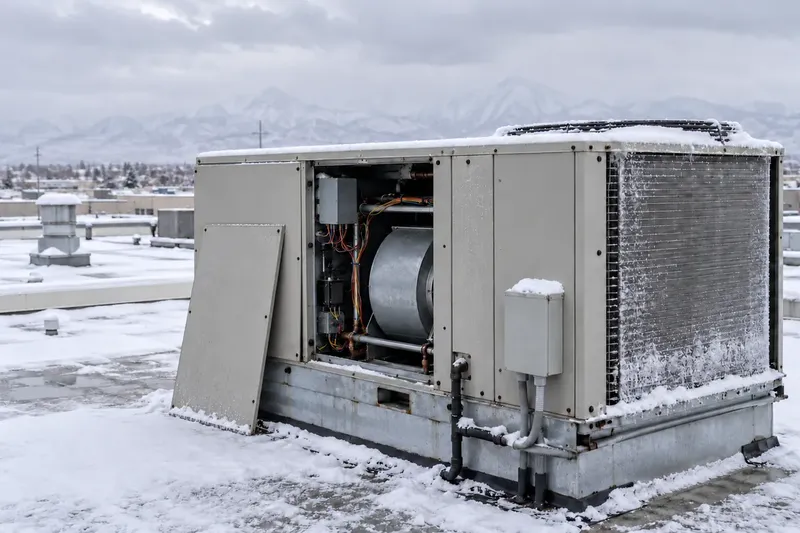
Buildings and equipment in Salt Lake City
Downtown has office towers and hotels with chillers, boilers and air handlers. Older buildings around the city run equipment that's been modified many times. The northwest side near the airport is warehouses and industrial space with large rooftop units, makeup air units and unit heaters.
What's different in Salt Lake City
- Salt Lake City has an energy benchmarking ordinance for larger buildings. See Salt Lake City energy benchmarking, explained.
- The valley floor sees the worst winter smog, so filters load fastest here. See bad air days and your filters.
- Most buildings here are on Rocky Mountain Power for electricity and Enbridge Gas Utah for natural gas.
- Equipment replacements usually need a mechanical permit from Salt Lake City Building Services.
- At about 4,200 to 4,300 feet, gas fired equipment needs to be set up for altitude.
Preventative maintenance in Salt Lake City
Most commercial buildings in Salt Lake City do well with two to four visits a year: a cooling startup in spring, a heating startup in fall, and filters on a set schedule with extra checks through the winter. Late spring cottonwood fluff is worth a coil cleaning on its own.
The full schedule and task lists are in commercial HVAC preventative maintenance in Utah, and the fall list is in the Utah winter startup checklist.
HVAC repairs in Salt Lake City
Summer repairs in Salt Lake City are usually capacitors, contactors, dirty condenser coils and refrigerant leaks. Winter repairs are usually ignition problems, flame sensors, cracked heat exchangers and frozen coils. Before you call, check the schedule, the breaker, the filter and any error codes.
See commercial HVAC repairs: what to check before you call, and if a unit keeps coming back, repair or replace a 15 year old rooftop unit.
Replacing equipment in Salt Lake City
New rooftop units and split systems now use refrigerants like R-454B and R-32. Plan for lead times, the curb, the crane day and a mechanical permit from Salt Lake City. Read the refrigerant change before you order.
Common questions in Salt Lake City
Do Salt Lake City buildings have to report energy use?
Larger commercial buildings in the city do, under the Elevate Buildings ordinance. Confirm the current size threshold and deadline with the city.
What HVAC equipment is common in downtown Salt Lake City?
Central plants with chillers, boilers and air handlers in towers and hotels, and rooftop units on smaller buildings.