Winter startup checklist for commercial buildings.
By Tyler Wayne, FMP · Working B2B HVAC Rep on the Wasatch Front · Updated October 2026
Before the first hard freeze on the Wasatch Front, check four things: the gas heat sections and heat exchangers on your rooftop units, freeze protection on coils and outside air dampers, your filters, and boiler startup. Most of the no heat calls in November come from equipment that ran cooling all summer and never got a heating check.
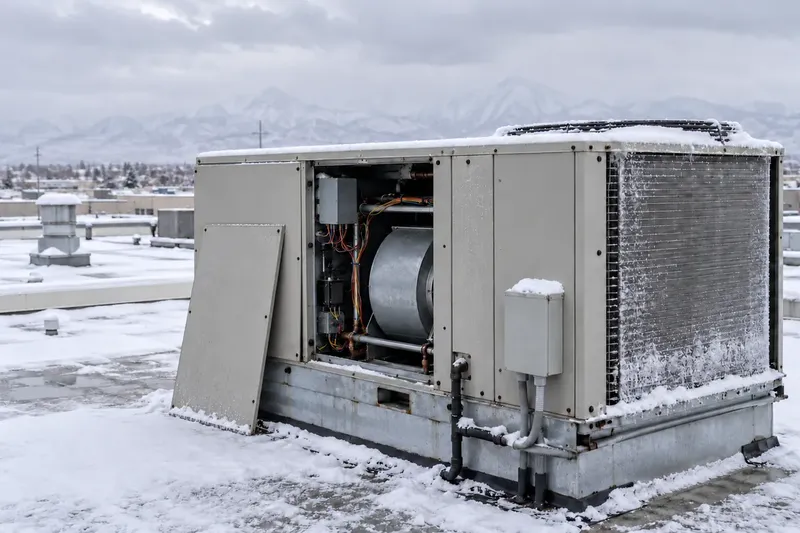
Why winter startup matters along the Wasatch Front
Fall weather here swings hard. A building can run cooling in the afternoon and need heat by morning. Equipment that switches modes for the first time in months is where problems show up, and they tend to show up on the coldest night of the week.
A startup visit catches the small stuff while it's still small: a dirty flame sensor, a sticky damper, a clogged condensate line.
The checklist
1. Rooftop unit heat sections
- Have a qualified tech inspect each heat exchanger for cracks, holes and heavy corrosion. A cracked heat exchanger can leak carbon monoxide into the building, so a unit with one should stay off until it's fixed.
- Check burners, ignition and the flame sensor. A dirty flame sensor is one of the most common reasons a unit lights and then shuts off.
- Make sure flues and vent openings are clear of nests and debris.
- Confirm gas pressure and safeties on startup.
2. Freeze protection
- Watch the outside air dampers close when the unit shuts down and when it's cold. A damper stuck open is a common way coils freeze.
- Test freeze stats and economizer controls.
- Check condensate drains and traps, and any heat trace on lines that sit outside.
3. Filters
Start the season with clean filters. Salt Lake's winter bad air days load filters faster than you'd expect, so plan to check them monthly through February. More on that in bad air days and your filters.
4. Boilers and hot water loops
- Run boiler startup before tenants need heat: safeties, burner, combustion check and water treatment.
- Check pumps, expansion tanks and air separators on the loop.
- If a loop uses glycol, test the concentration before the first freeze.
5. Schedules and setpoints
Switch thermostats and building controls to winter schedules. Check after hours setbacks so the building isn't trying to recover from a deep setback on a single digit morning.
If a unit fails during a hard freeze
Call your service provider before tenants start bringing in space heaters. Don't keep resetting a unit that keeps locking out. It's telling you something, and repeated resets can make a small problem bigger.
Common questions
When should commercial buildings do winter startup?
Before the first hard freeze, which along the Wasatch Front usually means October. Earlier is better in buildings with older equipment or anything that serves critical spaces.
Is a cracked heat exchanger dangerous?
Yes. A crack can let combustion gases, including carbon monoxide, into the airstream. Shut the heat section down and have it inspected and repaired before using it.
How often should commercial filters be checked in winter?
Monthly from December through February is a good rule in Salt Lake and Utah County, because bad air days load filters faster.