First year HVAC questions in a new building.
By Tyler Wayne, FMP · Working B2B HVAC Rep on the Wasatch Front · Updated October 2026
In a new building's first year, most of the HVAC is still under the installing contractor's and manufacturers' warranties. Use that year: collect the documents, start maintenance on day one, track comfort complaints, and walk every unit before the warranty ends.
Get the documents now
- Operation and maintenance manuals for every piece of equipment.
- As-built drawings and the equipment schedule.
- The test and balance report.
- Controls sequences and login details for the building system.
- Warranty start and end dates for each unit.
It's much harder to get these a few years later, after the project team has moved on.
Start maintenance on day one
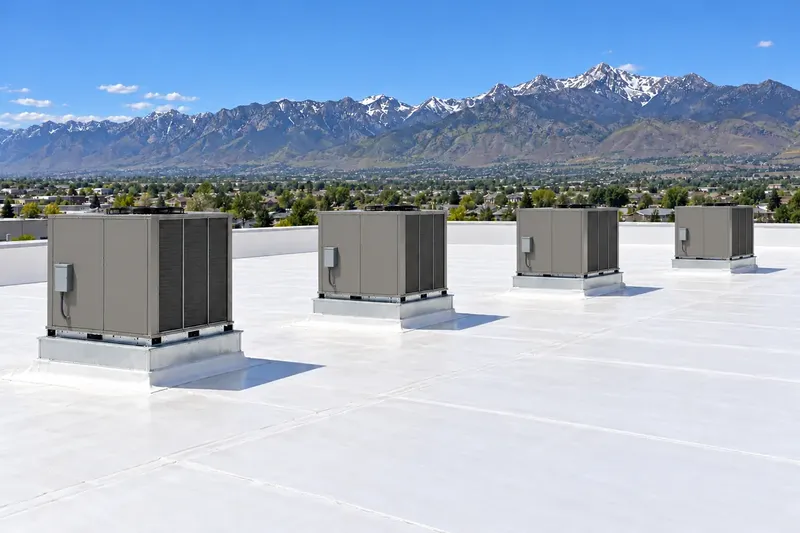
Some manufacturer warranties expect documented maintenance. Filters, belts and coils on brand new rooftop units still need care, especially with construction dust in the first months.
Expect comfort complaints the first seasons
New buildings often need fine tuning: airflow balancing, thermostat locations, and control sequences adjusted to how people actually use the space. Tenant improvements can change loads too. Log every complaint with a date and room, so patterns are easy to spot.
Do a warranty walk before it ends
About a month before the warranty ends, walk the equipment with your service provider and write down anything that isn't right. Report it to the installing contractor while it's still covered.
Growing fast in Utah County
From Lehi to Provo, a lot of buildings are new. That means a lot of warranties ending around the same time. Put the dates on a calendar now.
Common questions
How long is the HVAC warranty on a new building?
It varies. The installing contractor typically warranties their work for a period, and manufacturers warranty equipment and parts separately. Get the dates in writing.
Do I need maintenance on brand new HVAC?
Yes. Filters, belts and coils still need care, and some warranties expect documented maintenance.
What is a warranty walk?
An inspection of the equipment with your service provider shortly before the warranty ends, so problems get reported while they are still covered.